 Fabricante de espanador de ar elétrico na China – Kinzir
Introdução: O mito do poder de sucção
Ao escolher um aspirador de pó, muitos consumidores procuram imediatamente uma especificação: poder de sucção.
Uma crença comum é:
“Quanto maior o poder de sucção, melhor será o aspirador.”
Os fabricantes costumam destacar números impressionantes, como 15KPa, 20KPa, ou pressão de sucção ainda maior, enquanto as velocidades do motor podem atingir dezenas de milhares de RPM.
Mas será que um número mais elevado significa sempre um melhor desempenho de limpeza??
A resposta é: não necessariamente.
Um aspirador verdadeiramente eficaz não se trata apenas de potência máxima de sucção. É o resultado de uma combinação de fatores, incluindo desempenho motor, projeto de fluxo de ar, eficiência de filtração, tecnologia de bateria, e estrutura do bico.
Compreender estes factores ajudará os consumidores a escolher um aspirador que proporcione melhores resultados de limpeza no mundo real..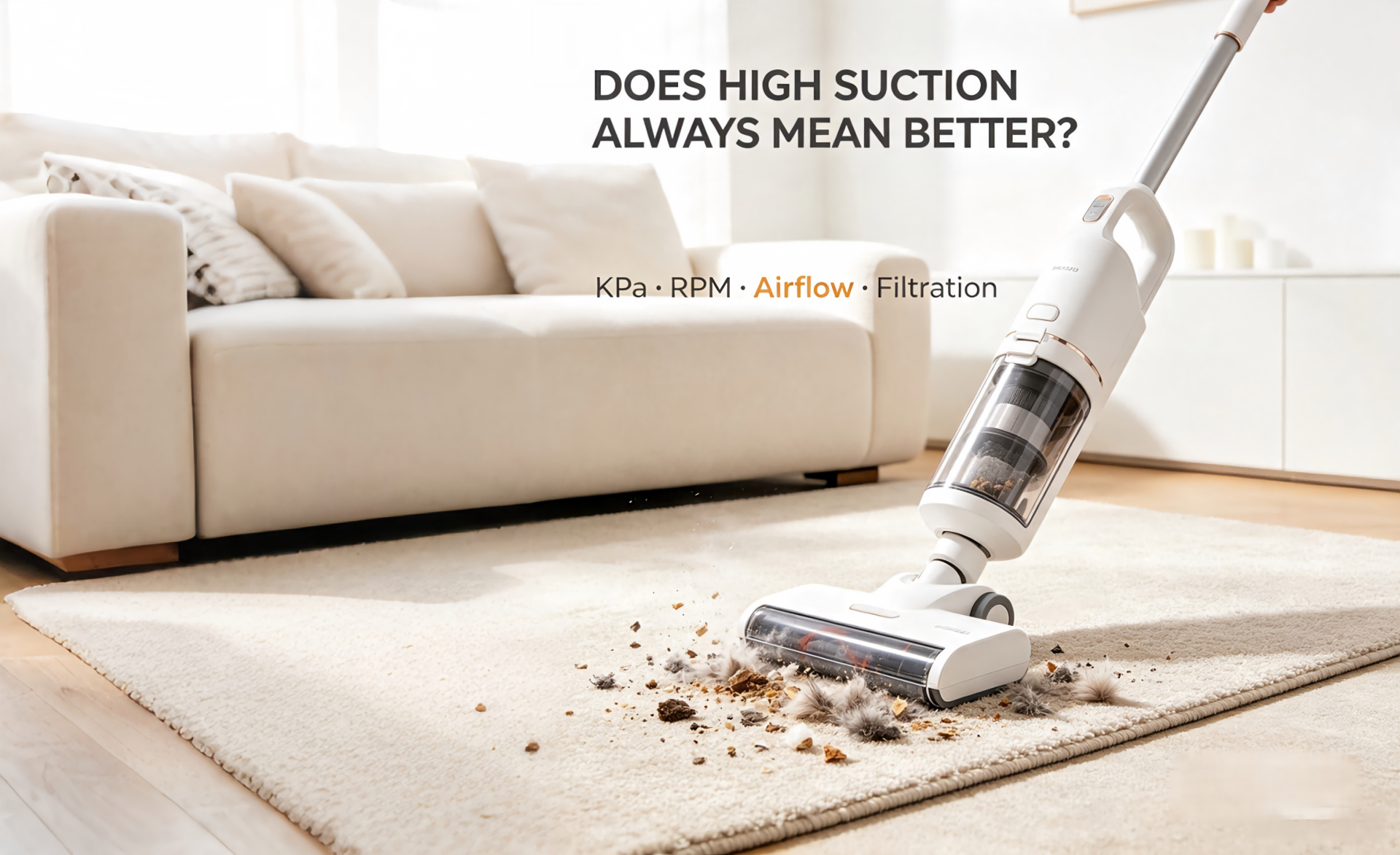
1. O que significa KPa em um aspirador de pó?
Compreendendo a pressão de sucção a vácuo
KPa significa quilopascal, uma unidade usada para medir a pressão de vácuo.
Em termos simples:
KPa indica a força com que um aspirador de pó pode criar pressão negativa para puxar ar e poeira para dentro da máquina.
Um valor mais alto de KPa geralmente significa força de tração mais forte.
Por exemplo:
- 5KPa: Adequado para poeira leve e pequenas partículas
- 10KPa: Bom para limpeza doméstica diária
- 15KPa ou superior: Adequado para tarefas de limpeza mais profundas
No entanto, a pressão de sucção é apenas uma parte do processo de limpeza.
Um aspirador com KPa extremamente alto, mas com um design de fluxo de ar ruim, pode não ter um desempenho melhor do que um modelo bem projetado com sucção balanceada.
2. O que significa RPM e por que o motor é importante?
O papel da velocidade do motor
RPM significa revoluções por minuto.
Representa a velocidade com que o motor gira.
Os aspiradores sem fio modernos costumam usar BLDC (DC sem escova) motores, que pode atingir velocidades muito altas, às vezes excedendo:
- 50,000 RPM
- 70,000 RPM
- 100,000+ RPM
Um motor de alta velocidade ajuda a gerar um fluxo de ar mais forte e melhora o desempenho geral.
No entanto:
RPM mais alto não significa automaticamente melhor limpeza.
O motor deve trabalhar em conjunto com:
- Projeto da pá do ventilador
- Estrutura do canal de ar
- Saída da bateria
- Sistema de gerenciamento de calor
Um motor de alta velocidade mal otimizado pode criar mais ruído e consumir mais energia sem proporcionar uma vantagem significativa de limpeza.
3. Por que a potência de sucção por si só não determina a capacidade de limpeza
Muitas pessoas se concentram apenas na pressão de sucção, mas o desempenho real da limpeza depende de várias tecnologias importantes.
① Eficiência do fluxo de ar
Um aspirador de pó não “puxa” simplesmente a poeira.
Ele cria um sistema completo de fluxo de ar:
Entrada de ar → Motor → Filtro → Saída de ar
Se o caminho do fluxo de ar estiver restrito, o desempenho de sucção diminui.
Um sistema de fluxo de ar bem projetado pode manter um poder de limpeza estável mesmo durante operações mais longas.
② Desempenho Motor
Um motor potente fornece:
- Geração de fluxo de ar mais forte
- Sucção estável
- Melhor desempenho em diferentes superfícies
Os aspiradores sem fio modernos usam motores BLDC de alta eficiência porque fornecem:
✔ Alta velocidade
✔ Longa vida útil
✔ Menor consumo de energia
✔ Requisitos de manutenção reduzidos
③ Sistema de Filtragem
A sucção forte não faz sentido se a poeira escapar de volta para o ambiente.
Um bom sistema de filtragem é essencial.
Muitos aspiradores avançados usam:
- Filtros HEPA
- Filtros de malha de aço inoxidável
- Sistemas de filtragem multiestágio
Estas tecnologias ajudam a capturar partículas finas de poeira e a reduzir a poluição secundária.
Isto é especialmente importante para:
- Famílias com animais de estimação
- Usuários sensíveis a alergias
- Ambientes internos
④ Projeto do bocal
A conexão entre o aspirador e a superfície de limpeza também é crítica.
Um bico bem projetado pode melhorar:
- Eficiência na coleta de poeira
- Cobertura de limpeza
- Desempenho de limpeza de bordas
Por exemplo:
Um bico estreito funciona bem para:
- Espaços nos assentos de carro
- Limpeza de teclado
- Cantos do sofá
Um bico mais largo é melhor para:
- Pisos
- Grandes superfícies
4. Por que os aspiradores sem fio estão se tornando mais populares
Os aspiradores tradicionais geralmente oferecem um desempenho forte, mas têm várias limitações:
- Tamanho grande
- Armazenamento difícil
- Movimento limitado devido aos cabos
- Não é conveniente para limpeza rápida
Aspiradores portáteis sem fio resolvem esses problemas.
Os consumidores modernos preferem produtos que sejam:
✔ Leve
✔ Portátil
✔Fácil de armazenar
✔ Pronto para usar a qualquer hora
Um aspirador compacto pode realizar tarefas de limpeza diárias, como:
- Interiores de carros
- Superfícies de mesa
- Sofás
- Pêlos de animais de estimação
- Pequenas partículas de poeira
5. A importância da tecnologia de bateria
Para aspiradores sem fio, o desempenho da bateria afeta diretamente a experiência do usuário.
Um motor potente requer uma fonte de energia confiável.
Um bom sistema de bateria deve fornecer:
- Saída de tensão estável
- Longo tempo de trabalho
- Desempenho de carregamento seguro
- Uso eficiente de energia
Sistemas avançados de gerenciamento de bateria ajudam a proteger:
- Vida útil da bateria
- Operação motora
- Segurança do produto
Isso permite que os usuários desfrutem de um desempenho de limpeza poderoso sem se preocupar com carregamentos frequentes.
6. A tendência futura: Mais do que apenas sucção poderosa
O futuro dos aspiradores não consiste simplesmente em alcançar números de sucção mais elevados.
Os consumidores procuram uma melhor experiência geral.
Os futuros aspiradores se concentrarão em:
Design Leve
Os produtos ficarão menores e mais fáceis de manusear.
Limpeza multifuncional
Os aspiradores combinarão múltiplas funções:
- Aspirar
- Sopro
- Limpeza portátil
Controle de desempenho inteligente
Diferentes modos de limpeza ajustarão automaticamente a potência de acordo com os cenários de uso.
Operação tranquila
Níveis de ruído mais baixos se tornarão cada vez mais importantes, especialmente para ambientes domésticos e veículos.
7. Como escolher o aspirador certo?
Em vez de apenas perguntar:
“Quantos KPa tem?”
Os consumidores devem considerar:
1. Desempenho de sucção
Fornece energia suficiente para suas necessidades de limpeza?
2. Tecnologia Motora
Está equipado com um sistema de motor eficiente?
3. Sistema de Filtragem
Ele pode capturar efetivamente poeira fina?
4. Vida útil da bateria
Ele pode completar tarefas de limpeza sem carregamento frequente??
5. Design de Produto
É conveniente para o seu estilo de vida diário?
Conclusão: O verdadeiro desempenho de limpeza vem do equilíbrio
Um aspirador com maior poder de sucção nem sempre é a melhor escolha.
O melhor desempenho de limpeza vem do equilíbrio entre:
Velocidade do motor + pressão de sucção + projeto de fluxo de ar + filtração + eficiência da bateria + design fácil de usar
Um aspirador sem fio bem projetado não busca simplesmente números mais altos.
Ele se concentra em entregar:
- Forte capacidade de limpeza
- Operação confortável
- Desempenho confiável
- Comodidade no dia a dia
Porque o melhor aspirador não é aquele com maiores especificações.
É aquele que facilita a limpeza.